Key Properties

Short optical pulses

Picosecond 1064 nm laser with standard options including 60 ps laser, 100 ps laser, and 200 ps laser, with also custom pulse lengths available. A single-frequency nanosecond configuration (up to 1 ns) is available on request where the application calls for a longer pulse. This enables high temporal resolution and low-thermal-impact performance in precision analytical instruments.

Tunable repetition rate

Standard tuning range from 50–200 kHz, configurable down to single shot and trigger-in operation, ensures reliable synchronization in LIDAR, ranging, and time-correlated measurement systems.

High peak power

Pulse energies up to 10 µJ correspond to peak power exceeding 100 kW. Smooth electronic power control supports flexible system design and strong nonlinear interactions required in spectroscopy and material response studies.

Single-frequency spectrum

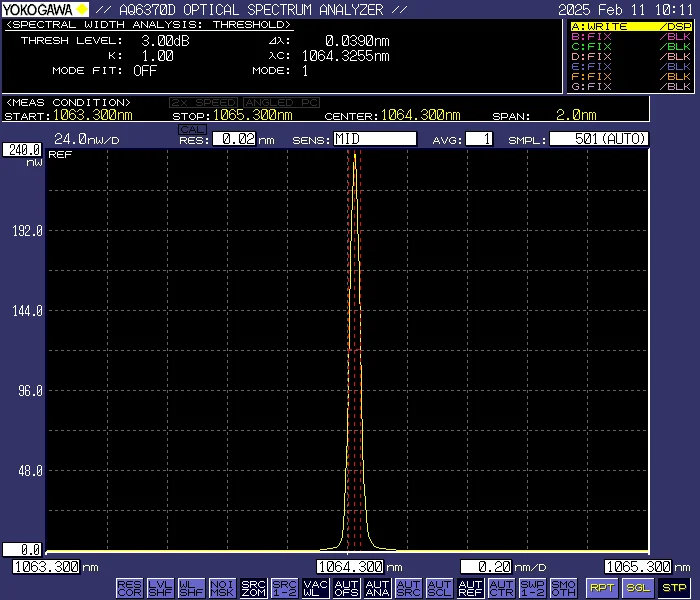
Single-frequency operation with < 0.06 nm linewidth and excellent spectral stability ensures high coherence and wavelength fidelity, making CP64 well suited for interferometry and narrowband sensing applications.

Compact footprint

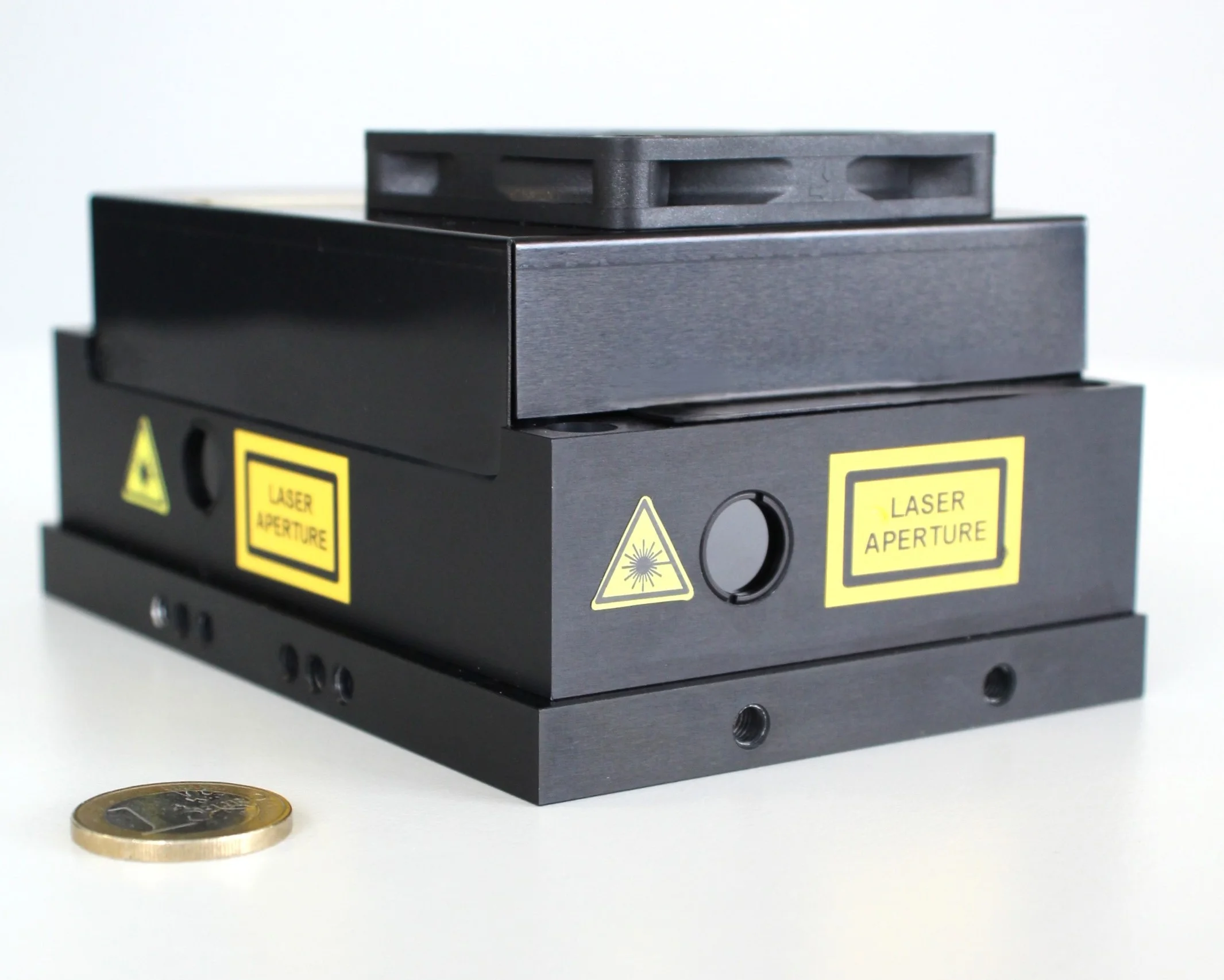
Measuring only 140 × 90 × 50 mm, including all control electronics, CP64 simplifies integration in OEM platforms, compact system modules, and portable field instrumentation.


Beam Properties

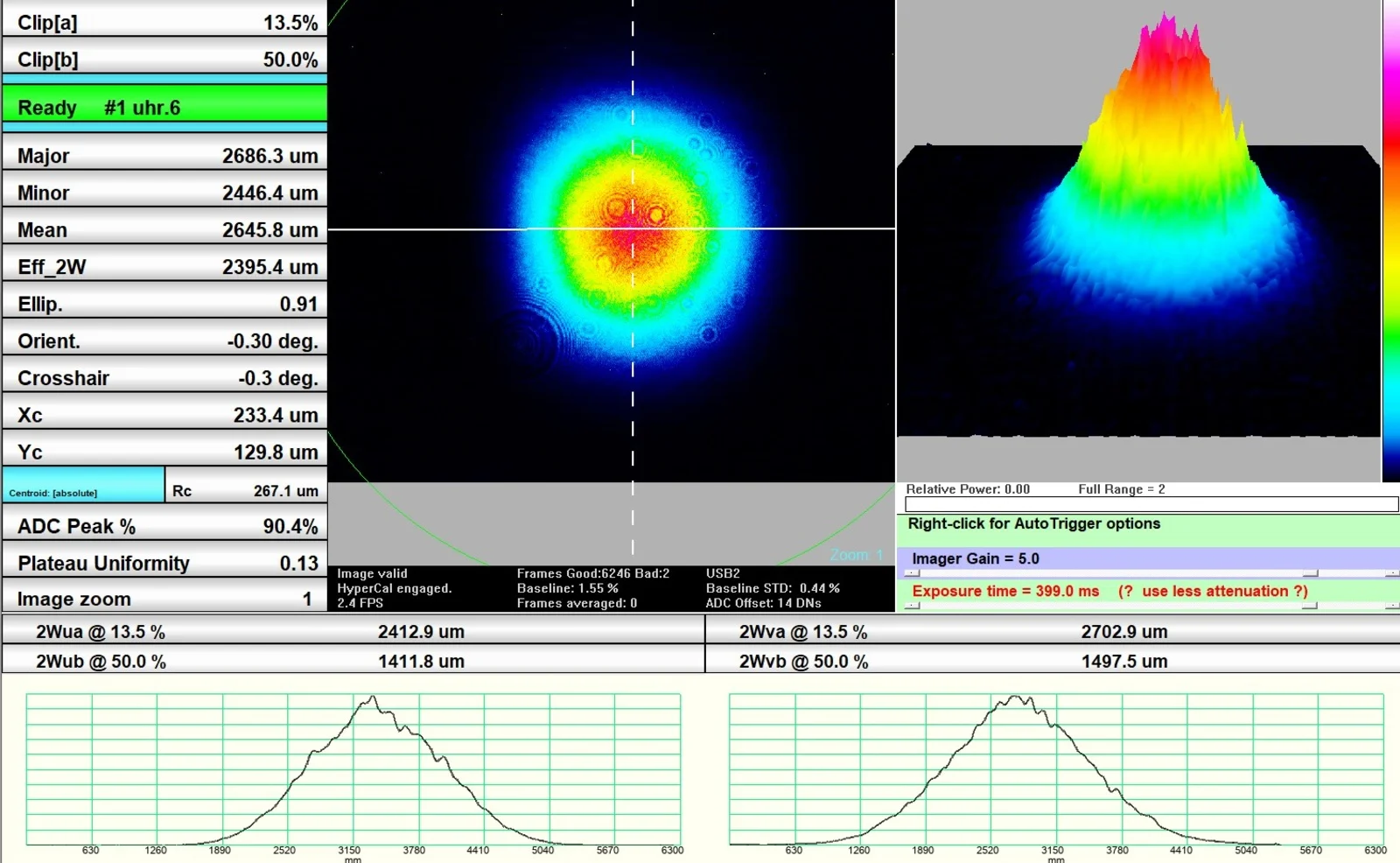
With M² < 1.3 and a collimated free-space output, the beam supports efficient optical coupling, precise focusing, and long-propagation performance in demanding optical setups.


Applications

Supercontinuum generation

Supercontinuum generation relies on the interaction of short, high-intensity laser pulses with nonlinear optical media to produce an extremely broad optical spectrum. The combination of short pulse duration, high peak power and excellent beam quality makes the CP64 well suited as a pump source for supercontinuum generation and other nonlinear optical applications.


High precision LIDAR

Short optical pulses, narrow spectral linewidth and high repetition rates support demanding ranging and sensing applications requiring high spatial resolution and accurate distance measurements. The CP64 is well suited for high-precision time-of-flight systems, including airborne ranging, industrial LiDAR and satellite laser ranging (SLR).

Micromachining and marking

Picosecond laser sources are widely used for precision micromachining and material processing because their short pulse durations minimize thermal effects and enable highly localized energy deposition. The CP64 combines sub-nanosecond pulse durations with high repetition rates and sufficient pulse energy, making it suitable for demanding industrial and scientific material processing applications.

Underlying Technology

The CP32 is based on Picophotonics' proprietary SESAM-based passive Q-switching technology, combining picosecond pulse durations, stable single-frequency operation and a compact microchip architecture.

Technology

Downloads

For a full list of specifications, download the technical datasheet and mechanical and electrical interfaces.

Technical Specifications Dimensions and Interfaces

Related Products

SP10 - Compact lower power microchip laser CP32 - 532 nm picosecond laser
Photoacoustic Microscopy All Products

Key Specifications

Wavelength1064.4 nm ± 0.3 nm
Spectral width< 0.10 nm
Pulse duration (factory set, ± 20 ps)60–250 ps (extendable to 1 ns)
Pulse repetition rate, tunablesingle pulse to 200 kHz
Maximum pulse energyup to 10 µJ
Maximum average powerup to 500 mW
M² (ISO 11146)≤ 1.3
Optical outputFree-space
Trigger-out signalOptical (free-space or fiber)
Dimensions140 × 95 × 75 mm
Country of originFinland

Typical values. Full specifications, stability data, interfaces and footnotes in the datasheet (PDF).

Interfaces & Integration

This laser is built to be driven by your system, not babysat by an operator — suited to benchtop research and integrated instruments alike. Available integration interfaces include:

Control & communication

USB and RS-232 control of laser and TEC operation via a documented command interface, so repetition rate, pulse energy and status are under your software's control.

Triggering & synchronization

TTL trigger-in for externally clocked pulse initiation, and a low-jitter optical or electrical trigger-out for precise synchronization with detectors and acquisition.

Optical output & cooling

Free-space or fiber-coupled output with a clean single-frequency spectrum, air or conduction cooling, and documented mounting and thermal-interface guidance.

Compact & robust

An alignment-free, monolithic microchip cavity with no consumable optics holds performance across shock, vibration and temperature — suited to portable, airborne and field-deployed systems.

Request Quotation

Wavelength, pulse duration (from 50 ps), pulse energy and repetition rate are configurable to your requirements — whether that’s a single research unit or integration into a product. Tell us what you need.

We reply within one business day.